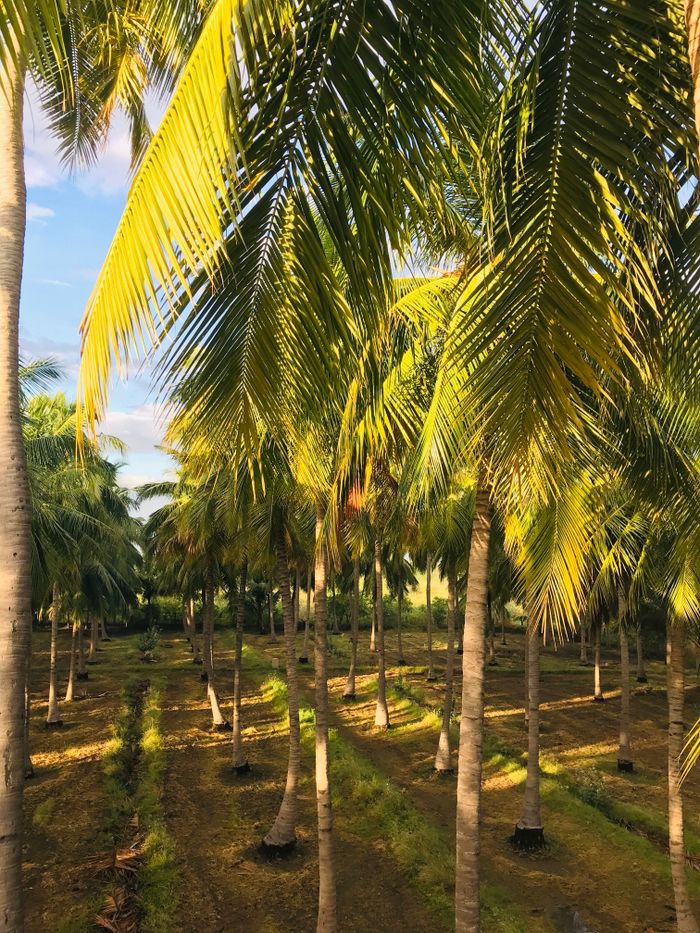
The Coconut Triangle
Puttalam, Kurunegala, Colombo.
Draw a line between those three districts and you have enclosed the majority of Sri Lanka's coconut land. The soil is sandy and free-draining, the rain arrives twice a year with both monsoons, and the palms have been worked there for generations.
This mock uses the region as the basis for an illustrative smallholder sourcing model. CoCo King has no contracted farms or suppliers, and the operating assumptions require diligence.
What the region could offer
Shorter road legs, with cold-chain diligence still required.
Proximity to Colombo could shorten the road leg, but actual packhouse locations, timings, food-safety controls, and freight availability still need supplier-level validation.
-
Two monsoons
Regional rainfall patterns can support harvests across much of the year; actual seasonality needs supplier-level validation.
-
Sandy soil
Free-draining ground near the coast suits king coconut better than the heavier inland soils.
-
Smallholder option
A future operator could diversify supply across small plots rather than rely on a single illustrative estate.
-
Close to port
Colombo is inside the triangle's southern corner, so the road leg is hours rather than days.
Know your nut
Three coconuts, three jobs.
Most of what a US shopper meets is one of these. They are the same species picked at different ages, or a different variety altogether, and they are not interchangeable.
-
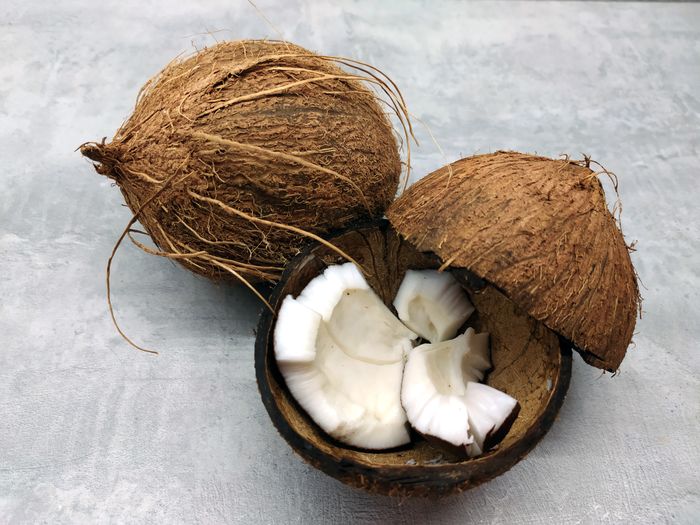
Mature brown
The one in the baking aisle
Left on the palm to full ripeness, then the husk is stripped to the hard brown shell. The meat is thick and firm, which is what becomes shredded coconut, coconut milk, and oil.
- Drink it for
- Not really. The water is scant and flat by this age.
- Flavour
- Rich and nutty, from the fat in the meat
- You buy it
- Whole in produce, or already shredded
-
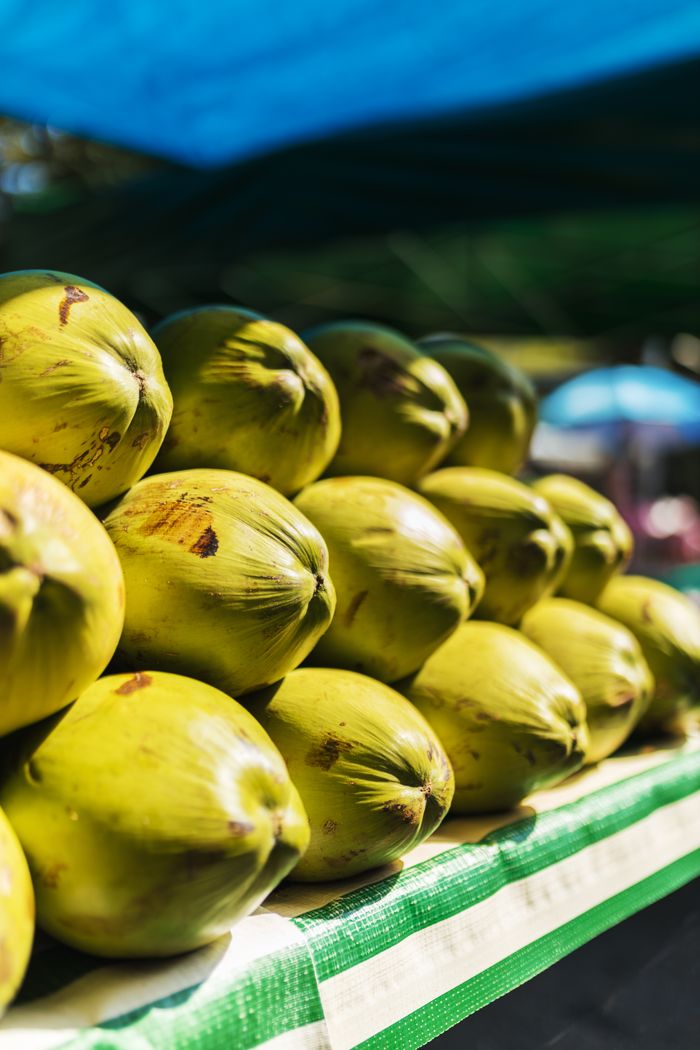
Young green
The one in your carton
Young green coconuts are harvested before full maturity while they hold more water and softer meat. They are commonly sold trimmed or used for packaged coconut water.
- Drink it for
- Volume. A lot of water per nut
- Flavour
- Lightly sweet, faintly grassy, sometimes a little saline
- You buy it
- Trimmed white, or bottled
-
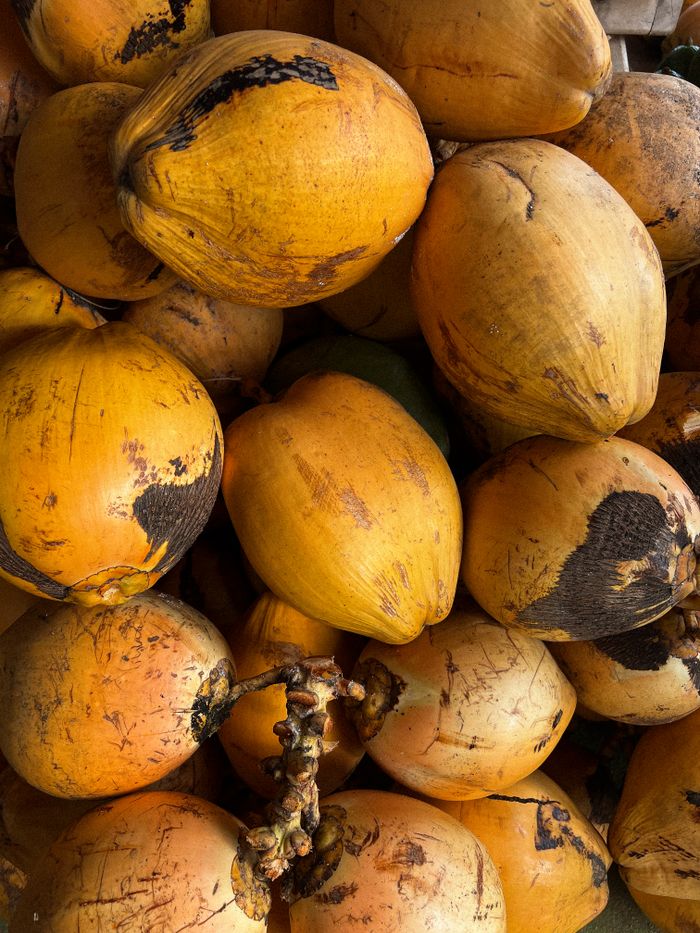
King coconut
The one you rarely see
King coconut is generally described as a distinct orange-coloured variety associated with Sri Lanka and consumed young for its water. Terminology should be verified with suppliers.
- Drink it for
- The taste, rather than the volume
- Flavour
- Often described as sweet and clean; this mock has not run comparative tasting or lab work
- You buy it
- Fresh availability outside producing regions appears limited and requires market validation
General educational characterisations, not independently verified specifications. Variety labels, common uses, flavour, water volume, and availability vary by cultivar, origin, season, maturity, handling, and market.
Proposed operating model
Smallholder sourcing, if diligence supports it.
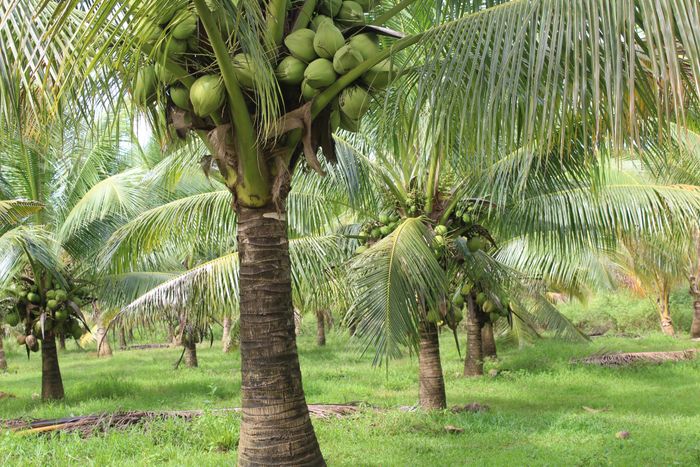
A future operator could coordinate supply across multiple small plots to diversify harvest timing and grower exposure. CoCo King has no current grower contracts.
Straight answer
This is a design mock.
CoCo King is not a trading company. This storefront was built to show how a king coconut business could sell to shoppers and to trade buyers from one site. Prices, rates, and lead times are plausible working figures rather than live offers. Capability-mock mode sends no order or enquiry data; a merchant can deliberately enable Shopify's live forms later. Farm photographs are stock imagery.
Straight answer
This is a design mock.
CoCo King is not an operating trading company. The sourcing model, suppliers, products, prices, rates, lead times, and logistics are illustrative until independently validated. This static capability mock sends no order or enquiry data.